AI Industry Shakeup
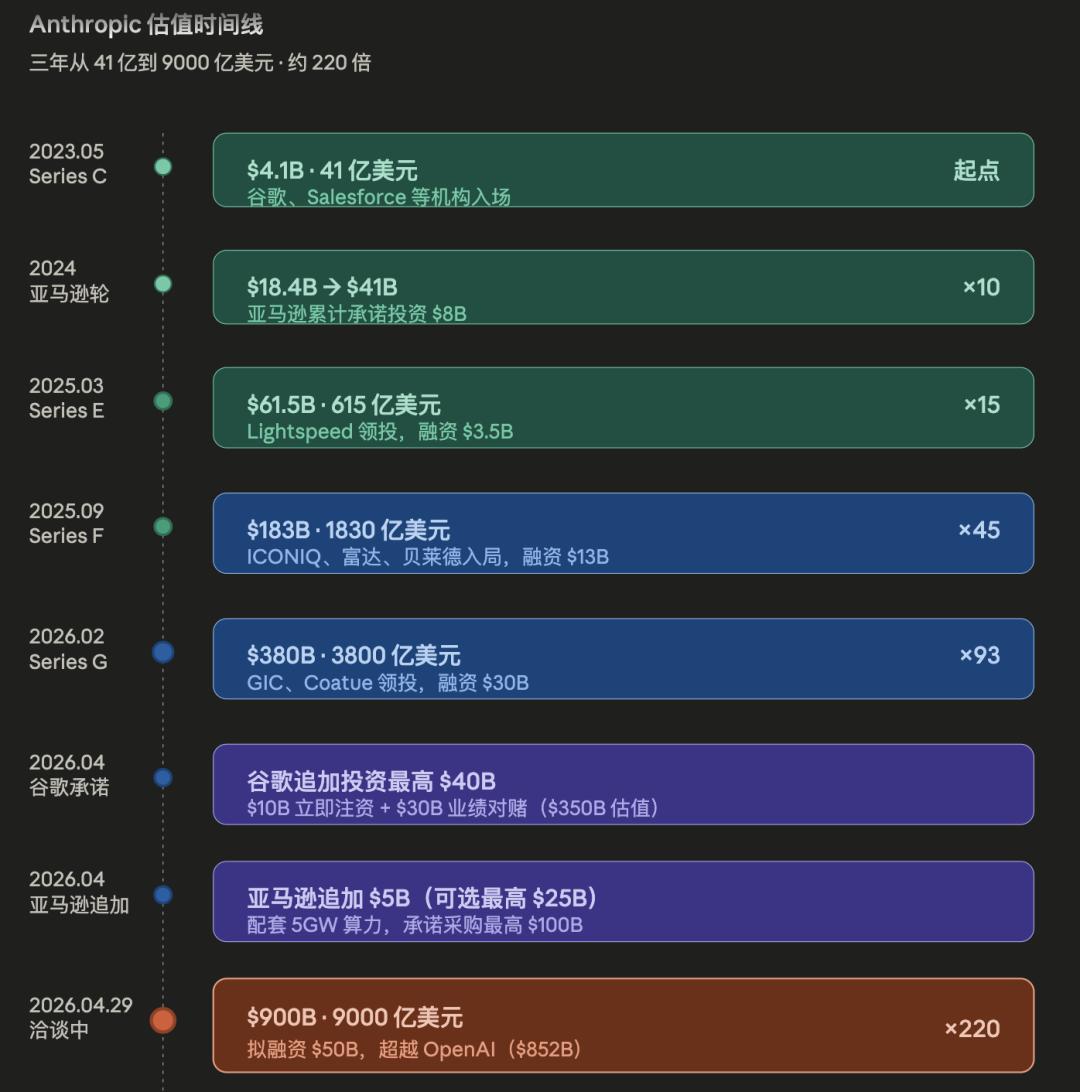
On April 29, it was reported that Anthropic is negotiating a new round of funding, with a valuation potentially exceeding $900 billion.
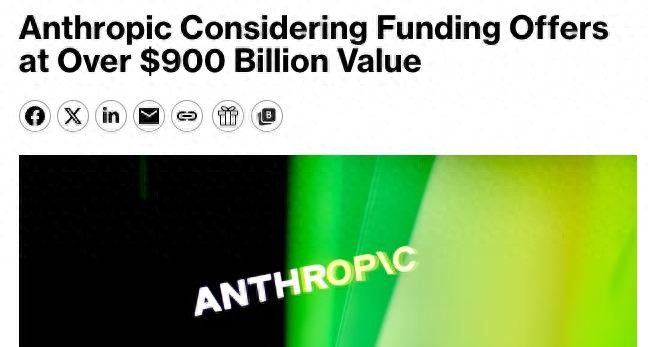
If this deal goes through, the company, founded less than four years ago, will surpass OpenAI to become the most valuable AI unicorn in the world.
What does a $900 billion valuation mean?
In the A-share market, it surpasses the market value of Kweichow Moutai. In Silicon Valley, it knocks OpenAI off its decade-long valuation throne.
Interestingly, just a few months ago, Anthropic’s valuation was $60 billion. Google and Amazon invested at a $350 billion valuation, committing a total of $65 billion. In less than a year, the valuation skyrocketed 15 times.
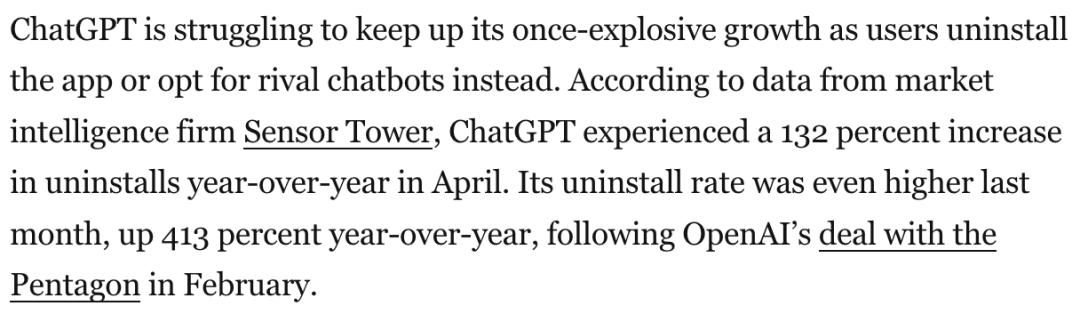
According to market intelligence firm Sensor Tower, ChatGPT’s uninstalls in April 2026 increased by 132% year-on-year, with a staggering 413% increase in the previous month.
During the same period, Claude’s downloads surged by 199% in just one week.
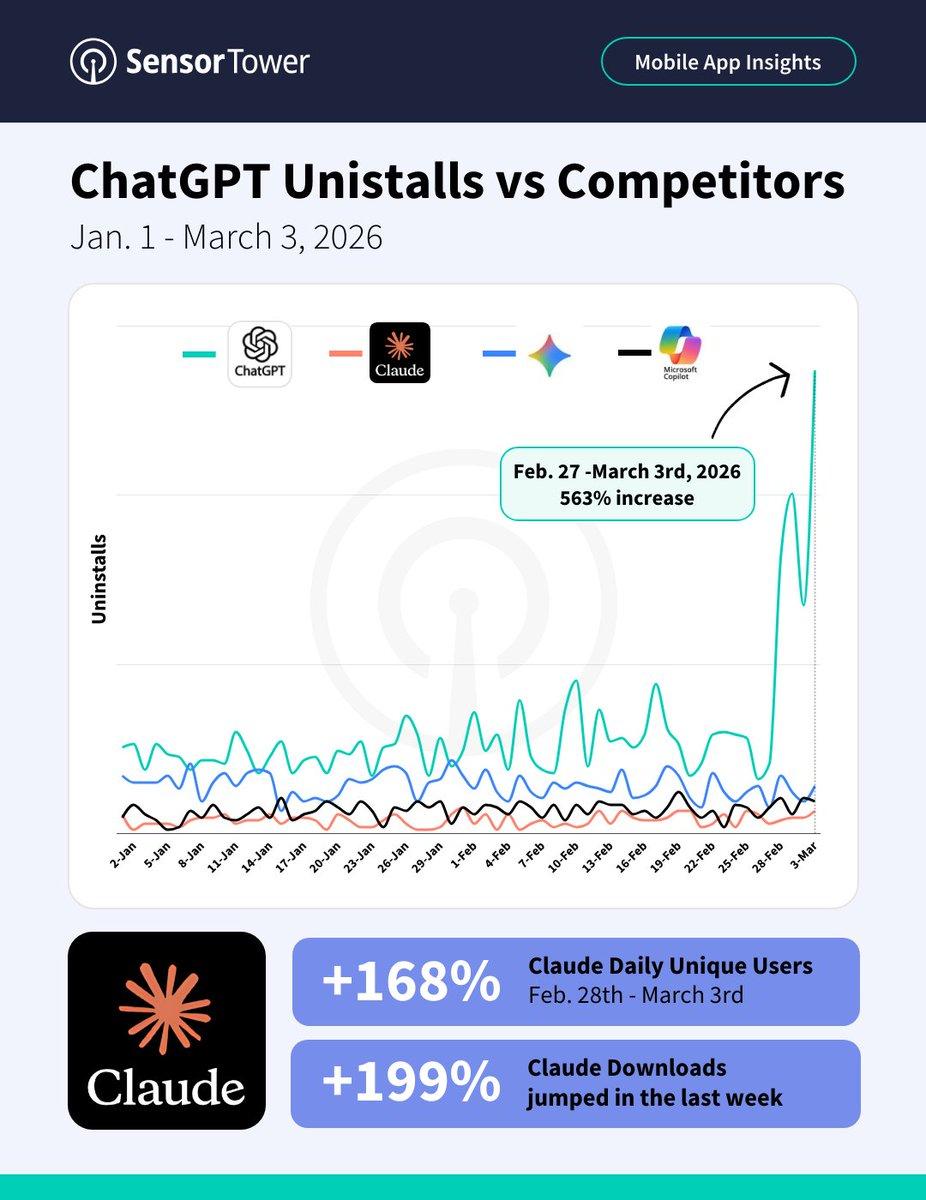
In several countries, Claude topped the iPhone free app charts.
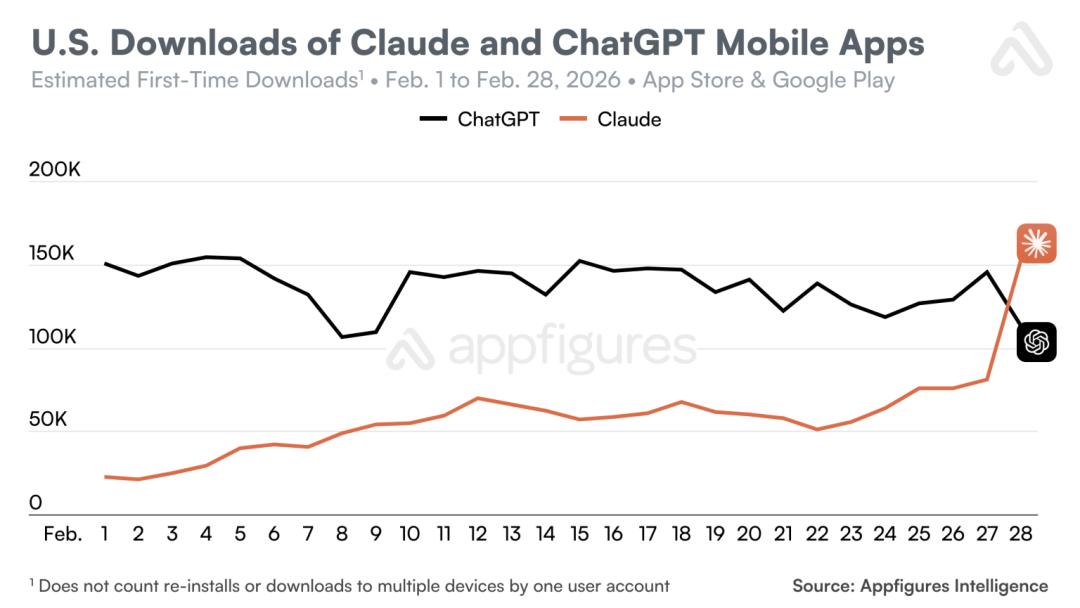
In the U.S., Claude’s daily downloads surpassed ChatGPT for the first time. On February 28, it reached the top of the U.S. App Store free apps and maintained that position until March 2, climbing over 20 spots in just a week. Claude also topped the free app charts in Belgium, Canada, Germany, Luxembourg, Norway, and Switzerland.
Users are voting with their feet, and they are accelerating.
OpenAI: Cracks in the Empire
On the surface, OpenAI still appears massive.
The GPT series boasts hundreds of millions of users, Codex has just sparked a new wave of interest, and the Stargate project claims to invest $500 billion in computing infrastructure.
However, the cracks in the empire often start from within.
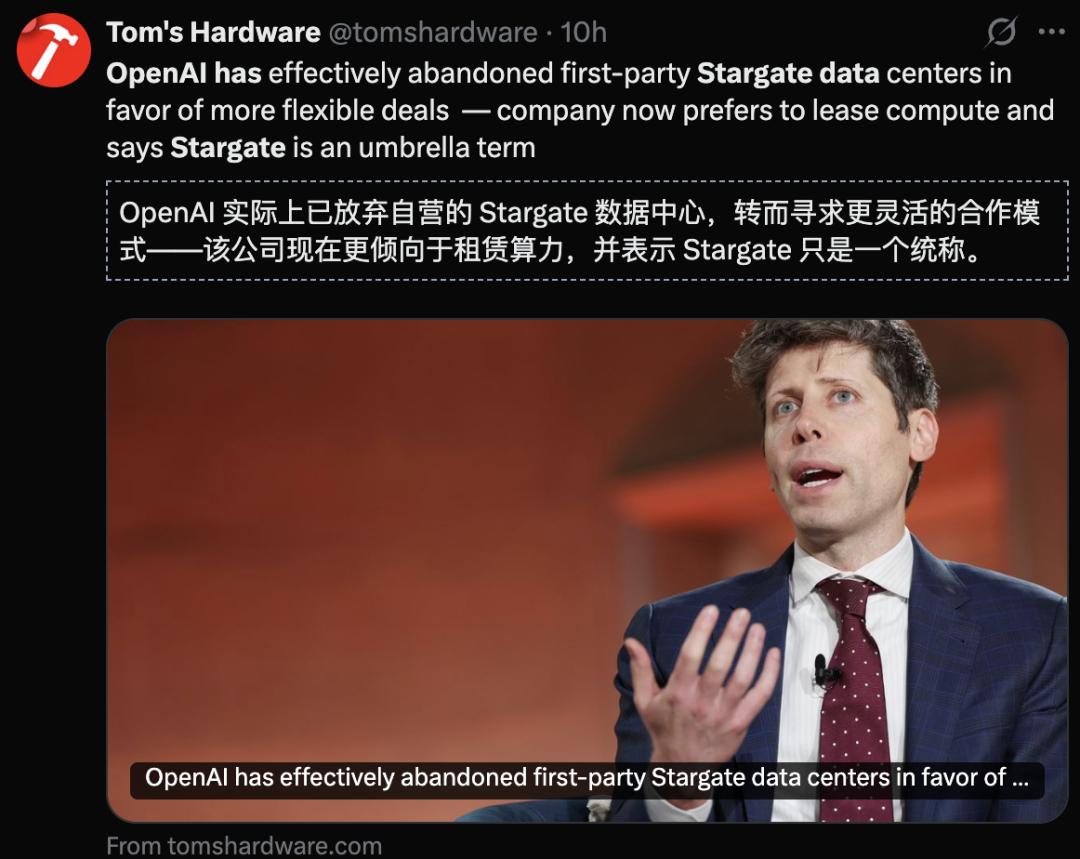
If user attrition is merely a skin-deep issue, the scaling back of the Stargate project is a serious injury.
Media investigations reveal that the actual progress of the Stargate project is far less glamorous than presented in proposals.
$500 billion. Ten nuclear power plants. The only pathway to humanity’s future. Now, it has become a shrunken rental contract.
Projects in the UK have been halted. The Norwegian project has been cut. The flagship base in Texas has been abandoned.
This is what Ultraman calls a “flexible mindset.” Partners refer to it as “burning bridges.” SoftBank is furious, Oracle is calculating, and Microsoft is quietly picking up the pieces.
The underlying message is clear: when OpenAI begins to shirk its infrastructure responsibilities, it loses control over the physical world.
Funding timelines, data center site selections, partner coordination—each step is under strain.
“Progress has been much slower than expected.”
Meanwhile, OpenAI is experiencing a silent talent drain.
Dario Amodei, the founder and CEO of Anthropic, was previously OpenAI’s Vice President of Research. He took not just himself but also a group of OpenAI’s core safety researchers with him.
When he left OpenAI, he stated, “Rather than staying to debate someone else’s vision, it’s better to take trusted people and create your own vision.”
This exodus has not ceased. Over the past two years, key members of OpenAI’s alignment and safety teams have continuously moved to Anthropic.
What is a company’s most valuable asset? It’s not user numbers or valuation; it’s the people who can define the next generation of models.
When these individuals choose to leave, the direction itself becomes the answer.
Anthropic: From ‘Safety Lab’ to ‘Most Valuable Unicorn’
Anthropic’s rise is a departure from Silicon Valley’s conventional narrative.
It did not start by burning cash to acquire users.
Its foundation was a paper on AI safety, and its selling point is “Constitutional AI”—using a constitution to constrain model behavior. For a long time, Silicon Valley’s mainstream view was that these people were too idealistic to succeed.
Then, Claude 3.5 Sonnet was released.
Its programming capabilities outperformed GPT-4o, its long-context understanding is far superior, and its hallucination rate has significantly decreased.
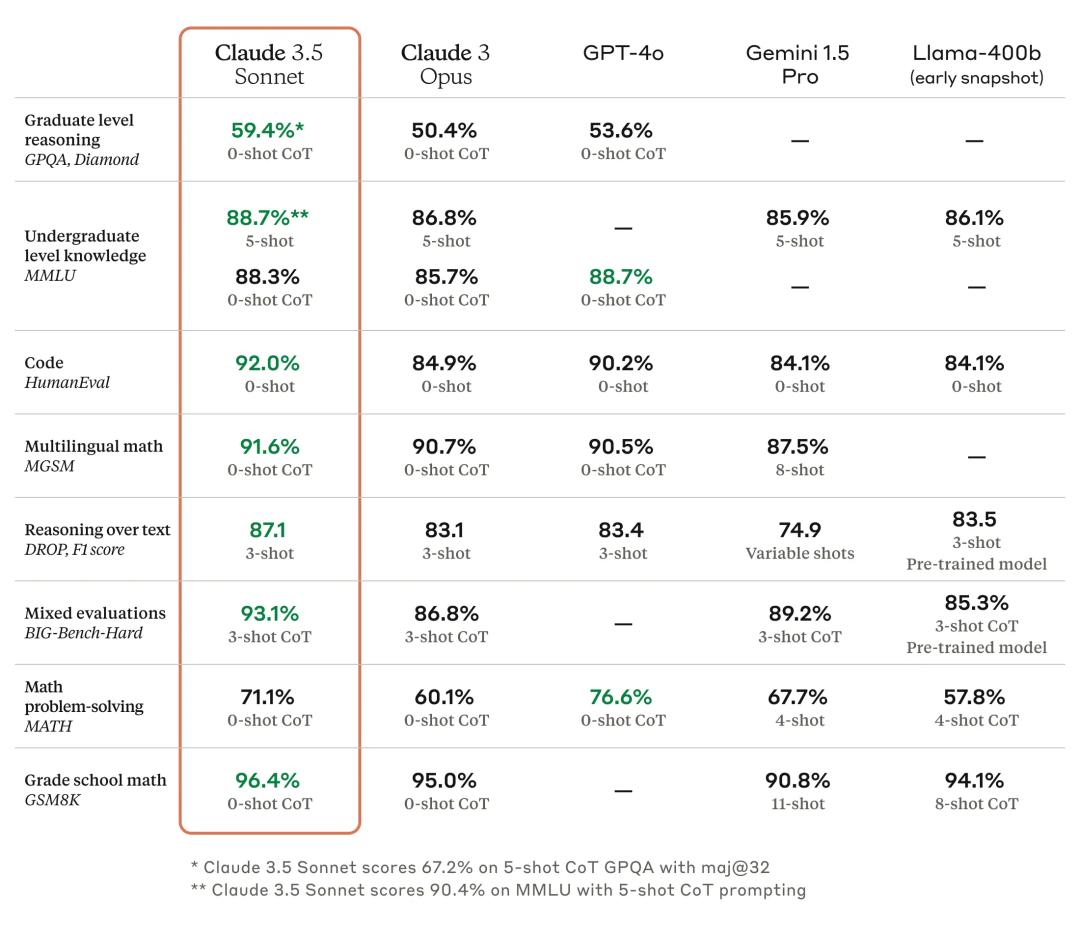
The developer community’s sentiment shifted overnight. On Reddit, Hacker News, and X, many users proclaimed: “I canceled ChatGPT Plus and switched to Claude.”
This sentiment was echoed by thousands.
More critically, on the enterprise side, Claude’s API call volume on AWS has more than doubled in the past six months.
An increasing number of enterprise clients are migrating their core businesses from GPT to Claude—not because it’s cheaper, but because it’s more effective.
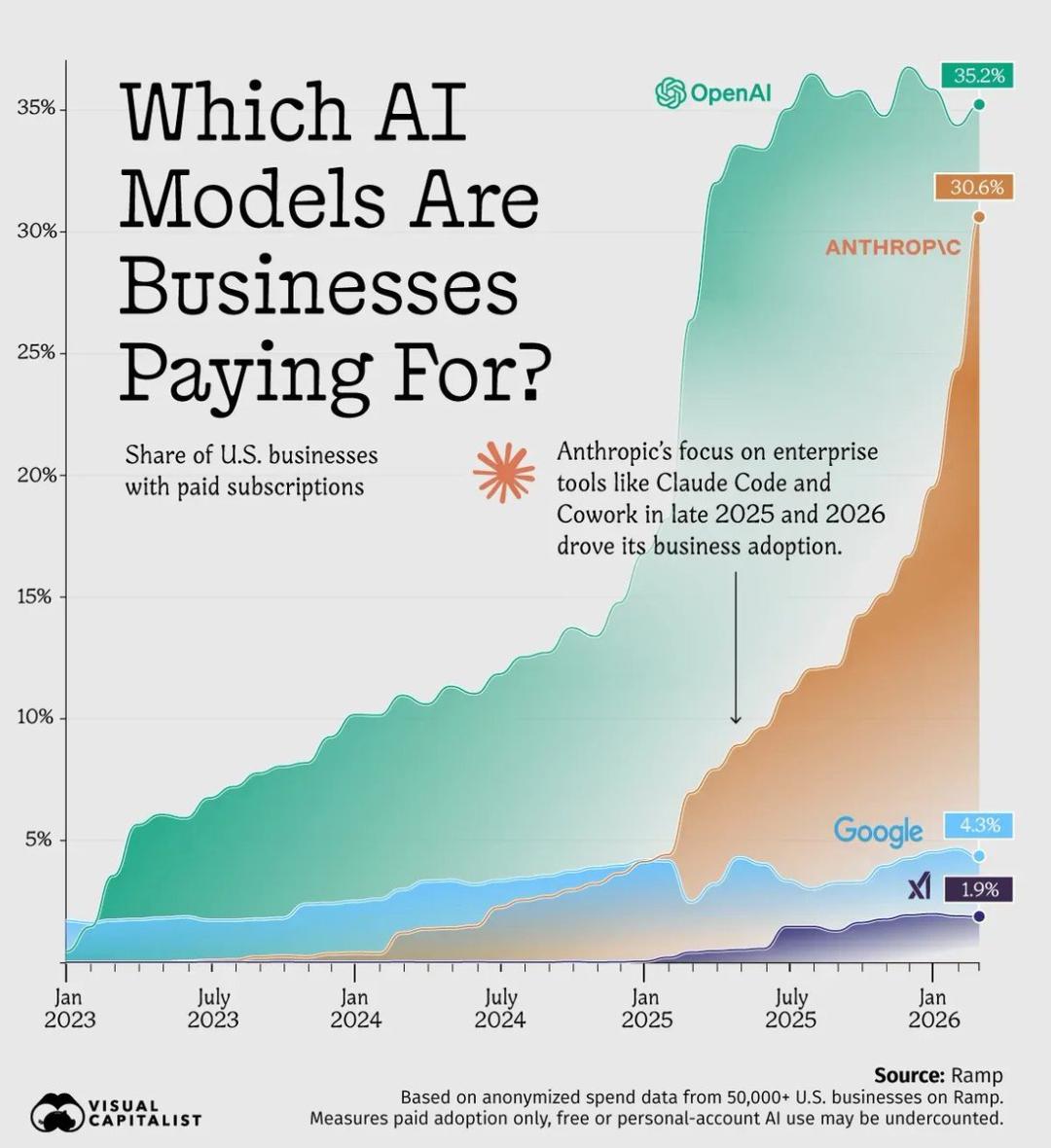
Google recognized this, which is why it invested heavily. Amazon saw it too, leading to a combined commitment of $65 billion, betting not on Anthropic’s present but on its capability to define the next generation of AI.
But has OpenAI truly lost?
Don’t rush to write OpenAI’s epitaph.
The iteration speed of the GPT-5 series remains astonishing. Just as 5.5 was released, signs of 5.6 appeared in the backend logs.
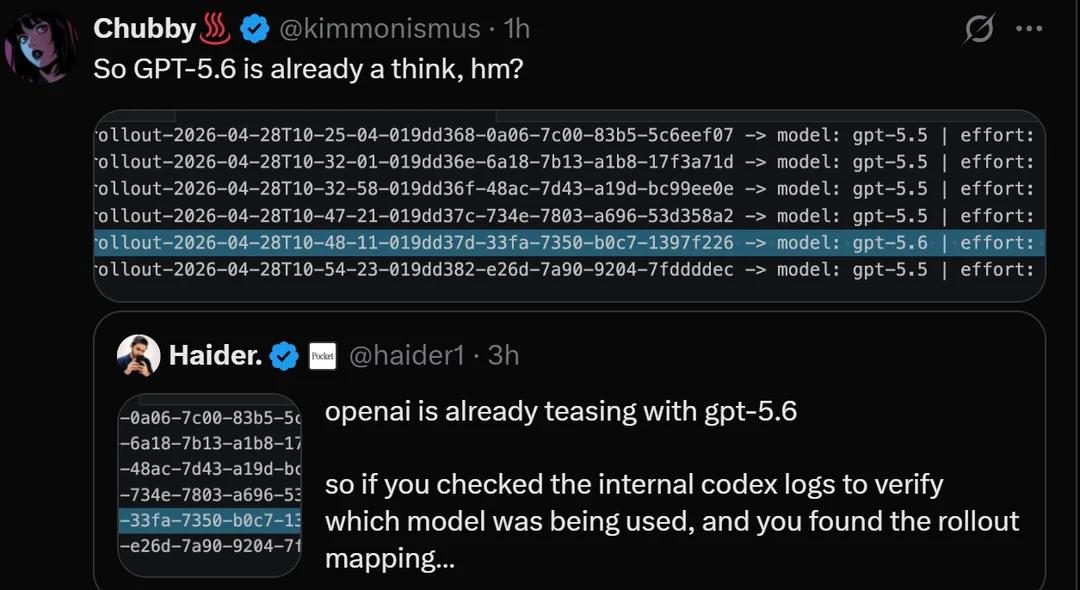
Codex is taking off as an intelligent agent tool, and the developer ecosystem’s moat is not something that can be breached overnight.
OpenAI’s other trump card is scale. Hundreds of millions of monthly active users, deep ties with Microsoft, and a global network of enterprise clients—these existing advantages won’t evaporate due to a funding news cycle.
Historically, surpassing in valuation has never equated to a predetermined outcome.
When Facebook went public in 2012, many believed Google’s social dream was shattered. A decade later, Google’s search empire has never truly been threatened.
The harsh reality of the AI race is that today’s throne may not hold after the next model release.
Winds of Change: Major Events are Unfolding
Zooming out, this is not merely a story of “who wins and who loses.”
It is a narrative of “the power structure in the AI industry is being rewritten.”
Two years ago, OpenAI was the only superstar.
A year ago, Google’s Gemini began to catch up.
Today, Anthropic has surged to the top valuation position.
Meanwhile, xAI is burning cash, Meta is stirring the pot, and open-source AI is in pursuit.
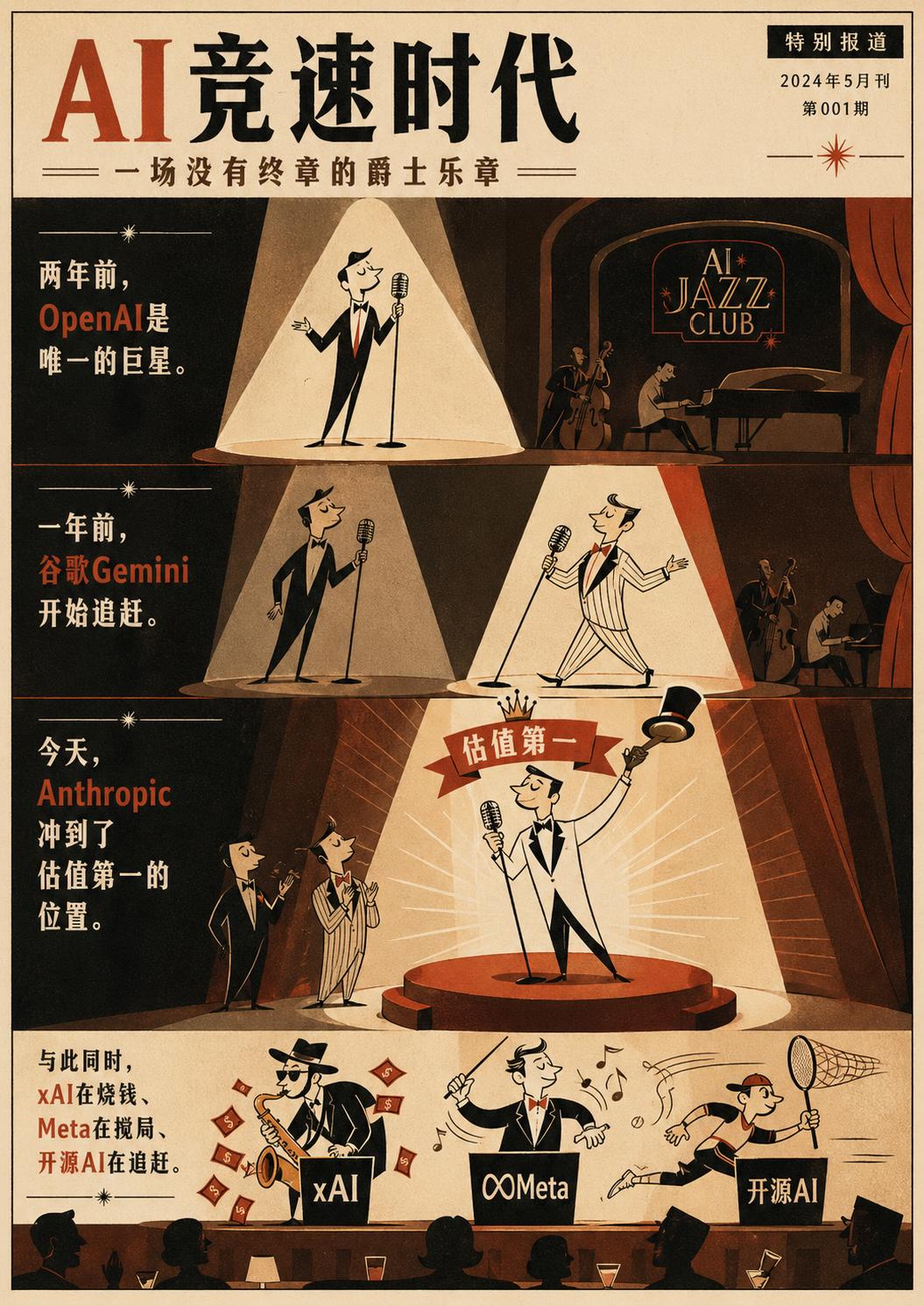
There will no longer be a single winner. AI is transitioning from “one dominant player” to “a multitude of contenders.”
In this chaotic battle, the only variable that will truly determine victory is who can produce the next generation of models first.
It’s not about whose pitch deck is more attractive or who raises more funds.
AI is not magic; it is heavy industry. It requires astronomical electricity costs, absolute credibility, and ruthless financial discipline.
Anthropic’s $900 billion valuation essentially represents the market’s bet that the next “iPhone moment” may not be in OpenAI’s hands.
Comments
Discussion is powered by Giscus (GitHub Discussions). Add
repo,repoID,category, andcategoryIDunder[params.comments.giscus]inhugo.tomlusing the values from the Giscus setup tool.